
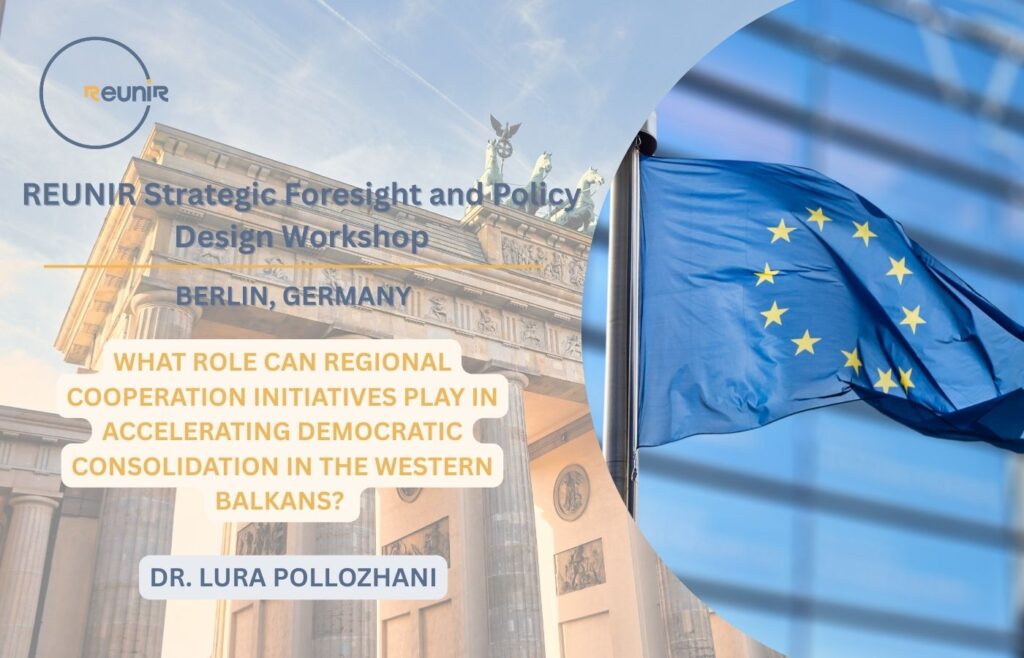
As part of our REUNIR Video Series, we continue sharing key insights from our Berlin Strategic Foresight & Policy Workshop.
In this edition, Lura Pollozhani, PhD, Researcher at the Centre for Southeast European Studies at the University of Graz reflects on the role of regional cooperation in strengthening democratic consolidation in the Western Balkans.
According to Lura, empowering civil society and grassroots actors is essential.
Civil society organizations remain one of the strongest pillars sustaining democratic consolidation in the region. To accelerate progress, regional cooperation initiatives must:
- Strengthen support for civil society organizations
- Ensure free mobility for democratic actors across borders
- Provide sustainable financial backing
- Protect spaces for expression and cross-border collaboration.
Too often, democratic actors face mobility restrictions and political barriers that limit their impact. In a contemporary Western Balkans committed to EU integration, this should no longer be the case.
Enabling greater mobility and structured regional support would not only advance democratic consolidation but also strengthen the region’s EU integration pathway. A vibrant and interconnected civil society helps anchor democratic reform as a sustained, citizen-led process established across the region.