
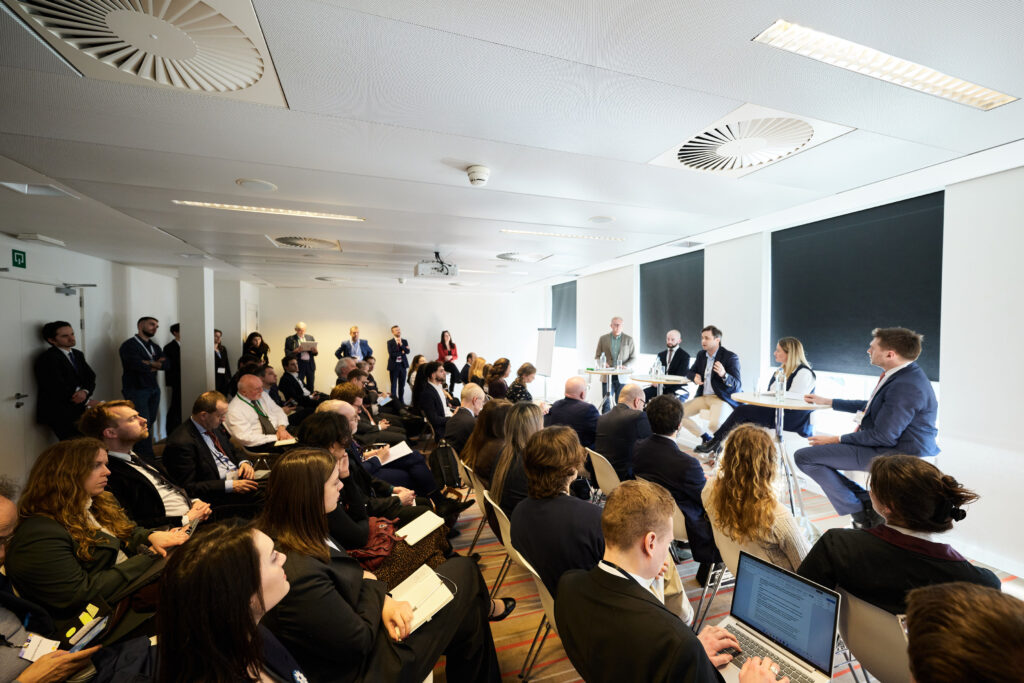
Brussels, 02 March, 2026 – More than 50 policymakers, diplomats and experts gathered yesterday at the Centre for European Policy Studies (CEPS) Ideas Lab for a high-level REUNIR panel debate on Europe’s security architecture and the future of EU enlargement.
The event brought together members of national government administrations from EU member states, diplomatic representatives from candidate countries, officials from the European Commission and the European External Action Service (EEAS), staff from the European Parliament, as well as scholars, think tank analysts, young ambassadors from candidate countries in the Western Balkans, business representatives and journalists.
Moderator:
- Steven Blockmans, Associate Senior Research Fellow, CEPS
Speakers:
- Leonid Litra, New Europe Centre Kyiv and ECFR
- Lukas Vesely, Ukraine service, DG ENEST
- Angelica Munteanu, Minister Counselore, Mission of Moldova to the EU
- Maximilien Jeudy-Gallais, Permanent Representation of France to the EU
The discussion focused on the credibility of long-term security guarantees for Ukraine amidst ongoing geopolitical uncertainty. Panelists explored how European allies can ensure sustainable political, military and financial support, and what mechanisms would make such guarantees both durable and credible.
Another key theme was the prospect of fast-tracking EU candidate countries on their path to membership. Speakers examined whether the current enlargement framework is sufficiently flexible to respond to increased security challenges, and how the EU can balance speed with the need to uphold rule-of-law and governance standards. The debate reflected growing momentum behind enlargement as a geopolitical investment in stability.
Participants also addressed Europe’s role in compensating for a potential withdrawal of United States military assets from Kosovo. The conversation assessed the EU’s capacity to step up its security responsibilities in the Western Balkans and the implications for regional stability.
The exchange included strong interaction between panelists and the expert audience, highlighting the urgency and complexity of aligning security commitments with institutional reform.
The REUNIR panel highlighted the interconnected nature of Europe’s security guarantees, enlargement policy and transatlantic burden-sharing at a crucial moment for the continent.