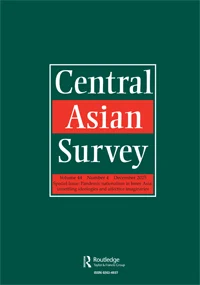
The article is originally published by the Central Asian Survey.
Authors:
Erekle Gozalishvili, MA European Studies, Faculty of Philosophy, Arts, History and Social Sciences, University of Regensburg, Regensburg, Germany.
Teodor Lucian Moga, Faculty of Law, Centre for European Studies, Alexandru Ioan Cuza University of Iasi (UAIC), Iasi, Romania
Abstract:
This article examines Georgia’s foreign policy from 2022 to 2024. The relevance of this topic is given by the window of opportunity for the association trio (Georgia, Moldova, Ukraine) to begin European Union accession talks following Russia’s full-scale invasion of Ukraine in 2022. However, Georgia’s application for EU membership, culminating in the awarding of candidate status in December 2023, has merely provided a compliance illusion. Paradoxically, despite the unprecedented EU accession opportunity, the ruling Georgian Dream party has shown an increasing readiness to undermine relations with the West in pursuit of domestic power consolidation. Between 2022 and 2024, Georgia’s foreign policy deviated from the Euro-Atlantic course, and, under the guise of foreign policy hedging, largely felt under Russia’s influence. The analysis suggests this ‘pseudo-hedging’ has been driven by two mutually reinforcing motivations: the pursuit of domestic power consolidation and the imperative to cope with the threat posed by Russia.
Read the full article
To cite this article: Erekle Gozalishvili & Teodor Lucian Moga (02 Feb 2026): How to dodge EU compliance while pledging commitment – Georgia’s pseudo-hedging between 2022 and 2024, Central Asian Survey, DOI: 10.1080/02634937.2025.2604065