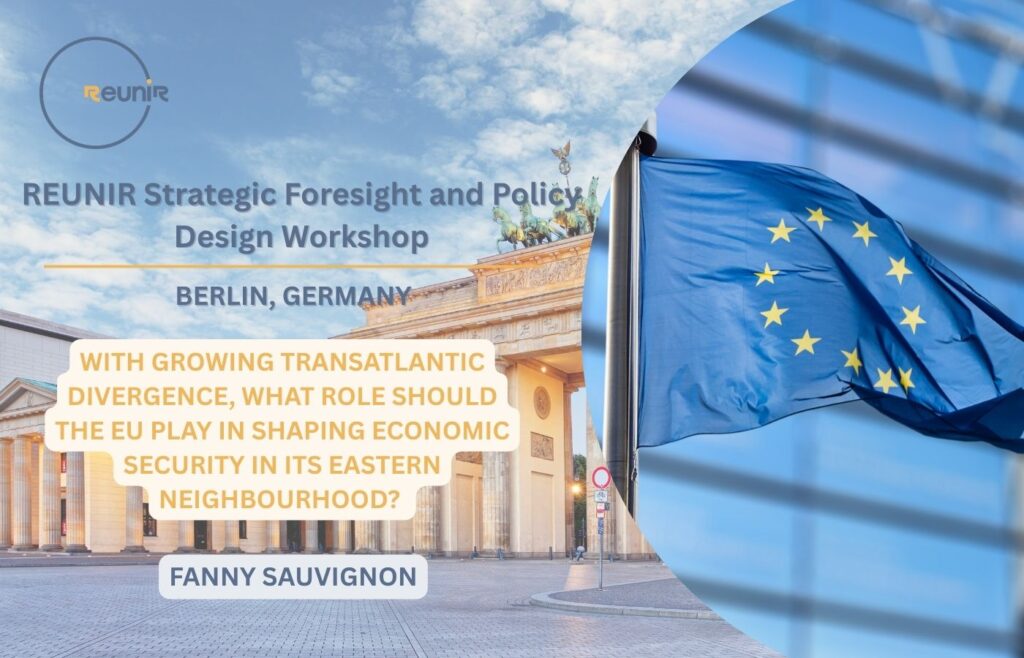
In our next video, Fanny Sauvignon (Researcher, Foreign Policy Unit, CEPS (Centre for European Policy Studies) explores a timely question:
𝐖𝐢𝐭𝐡 𝐠𝐫𝐨𝐰𝐢𝐧𝐠 𝐭𝐫𝐚𝐧𝐬𝐚𝐭𝐥𝐚𝐧𝐭𝐢𝐜 𝐝𝐢𝐯𝐞𝐫𝐠𝐞𝐧𝐜𝐞, 𝐰𝐡𝐚𝐭 𝐫𝐨𝐥𝐞 𝐬𝐡𝐨𝐮𝐥𝐝 𝐭𝐡𝐞 𝐄𝐔 𝐩𝐥𝐚𝐲 𝐢𝐧 𝐬𝐡𝐚𝐩𝐢𝐧𝐠 𝐞𝐜𝐨𝐧𝐨𝐦𝐢𝐜 𝐬𝐞𝐜𝐮𝐫𝐢𝐭𝐲 𝐢𝐧 𝐢𝐭𝐬 𝐞𝐚𝐬𝐭𝐞𝐫𝐧 𝐧𝐞𝐢𝐠𝐡𝐛𝐨𝐮𝐫𝐡𝐨𝐨𝐝?
Key insight:
On the economic level, the impact of transatlantic divergence is often indirect. The United States is not a major trade partner for EU candidate countries, the EU is. This means that any disruptions in EU–US trade relations, such as new tariffs or broader economic tensions could have spillover effects on EU investment and trade flows with candidate countries.
The real challenge:
Whether and how the EU can buffer or mitigate these effects to safeguard economic stability in its neighbourhood.
Watch the full video and follow us for more updates and insights from the REUNIR project!