
Author: Tony Lawrence, Head of Defence Policy & Strategy Programme, Research Fellow, International Centre for Defence and Security (ICDS).
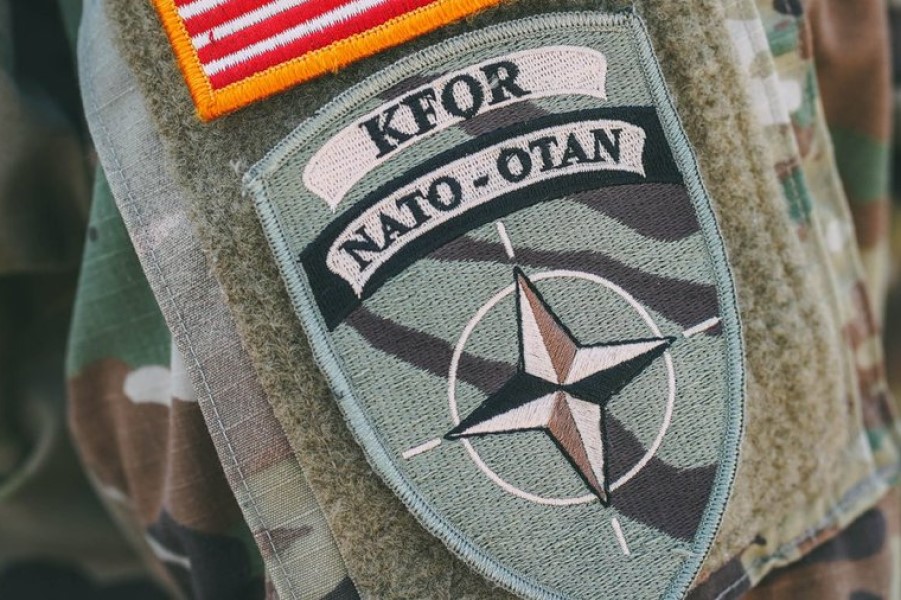
According to credible reporting in Politico, the US wishes to wind down KFOR, NATO’s peace support mission in Kosovo—not simply withdraw the US component, but close the shutters on the entire operation.
The rationale, as far as can be pieced together, has little to do with regional security considerations. As recently as mid-February, in the margins of the inaugural meeting of Trump’s ‘Board of Peace’, Secretary of State Marco Rubio said all the right things to President Osmani about regional peace, stability, and economic prosperity. Instead, KFOR may be disbanded as the vision for Europe set out in the Trump administration’s recent National Security Strategy and National Defense Strategy filters down to more operational levels.
These strategies see European states taking primary responsibility for their own defence and focusing their efforts and resources in Europe alone. The US thus wants NATO to concentrate on conventional defence and deterrence in the Treaty area, while abandoning its other core tasks of (out-of-area) crisis prevention and management, and cooperative security. These tasks, formally laid out in the Alliance’s Strategic Concept, date back to the early post-Cold War period as NATO adapted to a radically changed security environment. They were the basis for its large-scale peace support operations in the Balkans—IFOR, SFOR and KFOR—and for the inclusion of most of the Western Balkans countries in the Partnership for Peace programme.
However, under what is apparently known in the Pentagon as a “return to factory settings”, KFOR would be shut down, as would NATO’s advisory and capacity building mission in Iraq. Furthermore, partnerships with like-minded non-NATO states would be downgraded. For example, the US is pushing for neither Ukraine nor the Indo-Pacific partners to be invited to NATO’s summit in Ankara in July.
No decisions have been taken, but a KFOR withdrawal, or even just a withdrawal of US troops from KFOR, would certainly be risky. It would threaten instability in the region and open the door for malign actors, especially Russia, to exert greater influence. Other regional security actors, including EULEX and local police and military forces, would be increasingly burdened. Meanwhile, NATO’s credibility would be damaged.
If the US insists on this move, the EU must take the mission over, as it did when EUFOR Concordia succeeded NATO’s Allied Harmony in the then Former Yugoslav Republic of Macedonia in 2003, and EUFOR BiH (Althea) succeeded SFOR in Bosnia and Herzegovina in 2004.
KFOR’s situation is admittedly more complex. Consensus in the Council for an EU-led operation may be difficult to achieve given Hungary’s economic and security cooperation with Serbia and the non-recognition of Kosovo by five Member States. But three of these five—Greece, Romania, and Slovakia—currently participate in the NATO operation, as does Hungary.
Practically, an EU-led operation should be readily manageable. Of KFOR’s approximately 4800 troops, only 590, some 12%, are provided by the US. EU Member States contribute 65% and other partners the remainder (including 380 (8%) from Türkiye). It is likely that the US provides an outsize intelligence contribution to the mission, but experience in Ukraine has shown that Europe is already far more capable in this domain than might be supposed.
It is also likely that the US contribution has a disproportionately large deterrent effect. But this is perhaps dwindling as the Trump administration’s words and actions in the security arena, including its recent security and defence strategies, cast doubts on its commitment to deterrence in Europe as a whole.
Any move to end KFOR would cast more doubt on America’s reliability as a security partner, and further damage its reputation with its allies and partners. If it follows this course, the EU will have little choice but to assume the task itself—both to preserve stability in Kosovo and beyond, and to demonstrate the seriousness of its own commitment to the security of its future members.
Photo c: Kosovapress